
European Roulette at UK Online Casinos: Rules and Odds
 Available in GB
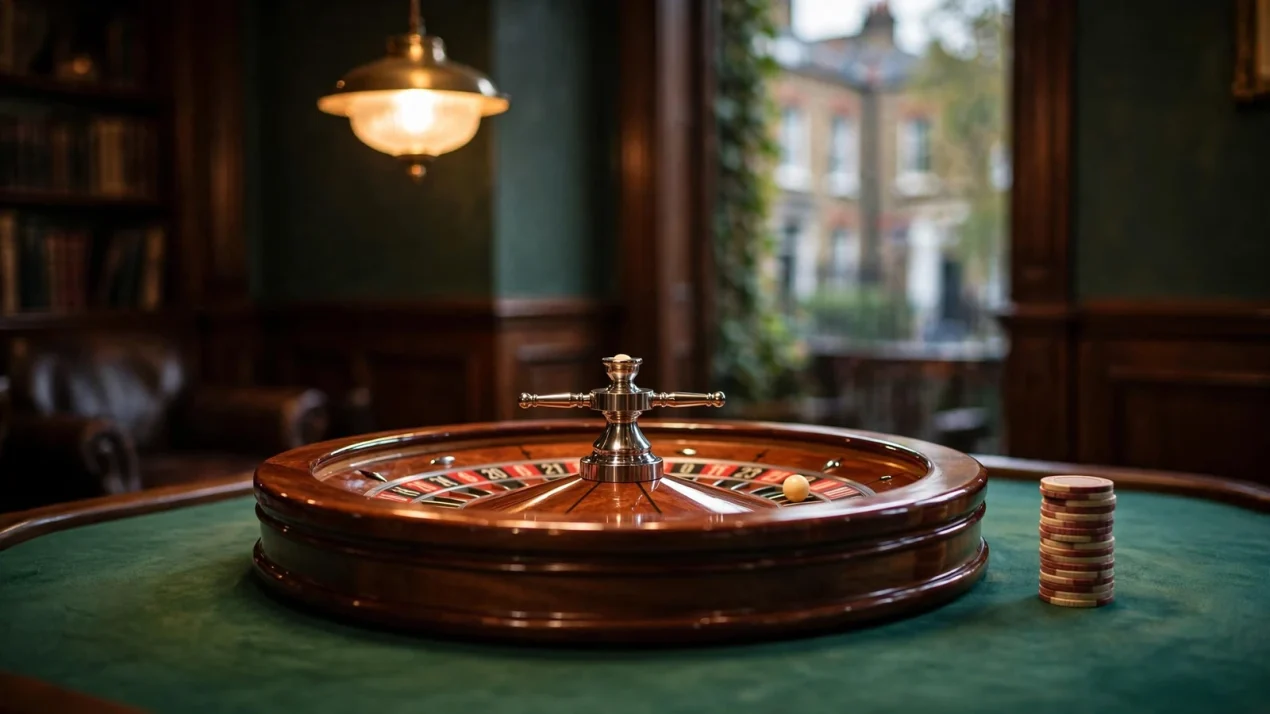
Contents
A guide to European Roulette’s 37-pocket wheel, betting terms, payouts and the differences between live and RNG tables.
Finding European Roulette in UK Online Casinos
European roulette is often listed among a casino’s table games rather than given a prominent place on its home page. The quickest way to establish whether it is available is to open the games menu and search for “European Roulette”, then inspect the game’s information panel before opening it. A result may refer to a live table, a software-generated game or a promotional page; the label alone does not explain what kind of play is offered.
Game filters can help narrow a large catalogue, but categories are not always consistent. Roulette may sit under table games, live casino or a provider’s own collection. A table marked “European” should identify the game variant in its rules or information screen. If it does not, the title is not enough to establish what is being offered. The same caution applies to names suggesting a VIP table: the label describes a product category, not a separate kind of licence or a guarantee of particular playing conditions.
The catalogue also changes. A casino can add or remove a game, and a title appearing in an old review may no longer be available. For a current check, the casino’s own lobby is more useful than an archived list of supposedly best European roulette casinos. Independent reviews may help locate a game, but they should not substitute for checking its present listing and rules. No operator ranking can establish that a particular table suits every player.
The legal boundary matters more than the polish of the lobby. The UK Gambling Commission is the sole regulator of online casino activity in Great Britain. Remote gambling operators selling into the British market must hold the relevant UKGC licence, wherever they are based. A platform without a valid UKGC licence cannot legally offer real-money roulette to British residents, including a live table streamed from a studio. A foreign address or an English-language site does not alter that position.
Online Casino Without ID in the UK: What It Means
Before depositing, the operator’s licence number can be checked against the Commission’s public register. The register helps confirm whether the business is authorised for the relevant activity; a logo on a page is not the same check. UK online gambling is legal for people aged 18 and over when the operator holds a UKGC licence. Operators must verify a customer’s age before allowing a deposit, so identity checks may form part of setting up an account rather than appearing only when a withdrawal is requested.
Account safeguards are part of the regulated environment, not decorative settings tucked away after registration. Remote operators must prompt new customers to set a financial limit before the first deposit and provide accessible account-level controls for limits. UKGC-licensed casinos must also offer self-exclusion. UKGC-licensed live casino operators must provide deposit and loss limits, session-time reminders, reality checks, cool-off periods and GamStop self-exclusion. These tools matter particularly where a live table’s social atmosphere makes continued play feel like a small decision repeated indefinitely.
Payment options have their own boundaries. UKGC licensees cannot accept credit-card payments for gambling, including credit-card funding routed through a money service business. They also cannot accept wallet payments where credit-card funds can be used for gambling. A payment method displayed in an account does not override those restrictions.
A regulated operator must provide an internal complaints process and access to an approved Alternative Dispute Resolution service if a complaint remains unresolved. It must also contribute to the Research, Education and Treatment levy. Those obligations sit behind the game catalogue, largely invisible while a player scrolls through tables. That is the point: a roulette listing is only one part of the offer.
The practical distinction is between finding a game and establishing that the account offering it is legitimate. The first can be settled in the lobby; the second depends on the operator’s licence and its account controls. European roulette may be easy to spot. The safeguards around real-money play deserve the same attention.
Recommended online casinos
- JetsetspinsBonus: 200% Bonus + 100 Free Spins + Free Royal Wheel · Payout speed: 1-3 business days
- ChanzeBonus: Slots Welcome Bonus #1 200% up to €500 · Payout speed: 1-3 business days
- SlotoSportBonus: 500% up to £ 10 200+ 777 FS · Payout speed: 1-3 business days
- SpinFormulaBonus: 550% Up To £15,000 + 550 FS · Payout speed: 1-3 business days
- EvoSpinBonus: 125% up to €2500 + 125 Free Spins · Payout speed: 1-3 business days
- ZombillionBonus: Welcome Pack 250% up to £4000 + 200 FS · Payout speed: 1-3 business days
The European Wheel: 37 Pockets and a 2.70% House Edge
A European roulette wheel has thirty-seven pockets: one for each number from one to thirty-six, plus a single zero. The numbers are not a score or a sequence of steps towards a result. They are separate possible landing places for the ball. When the wheel turns, the question is simply which pocket will receive it.
A European roulette wheel contains thirty-seven pockets: numbers one to thirty-six and a single green zero.
That spare green zero is the detail on which the game’s arithmetic rests. The numbered pockets are red or black, while zero is green; it belongs to neither colour. The same is true of the familiar pairs of opposites used in roulette: zero is neither odd nor even, neither high nor low. Those categories divide the numbered field, but they do not absorb the extra pocket.
The arrangement can look almost ceremonial. A player may watch a ball circle a polished rim, hear the dealer call a result, and see the table settle into a pattern of colour and number. Beneath that theatre is a small, exact inventory. Thirty-six numbered destinations and one green interruption. Chance has a tidy address book.
The house edge for European roulette is 2.70%. In plain terms, it expresses the casino’s mathematical advantage over time, not a promise about the result of an individual spin. A single outcome can favour a player, and a run of outcomes can appear to form a pattern. Neither changes the underlying calculation. The edge describes the long-run relationship built into the game’s rules.
This distinction matters because probability is often mistaken for a schedule. A wheel does not owe a particular colour, number or category after a run of previous results. Each spin is a fresh event, and the past does not lean on the ball. A sequence that looks unusual is still a sequence that chance can produce; it is not evidence that the next outcome must correct it.
The zero is what makes the wheel’s structure more than a neat division of numbered choices. If the field contained only the numbered pockets, categories such as red and black could divide those outcomes evenly. But zero sits outside them, while the casino’s advantage is reflected in the terms of the game. The green pocket is not decorative trim. It is part of the mathematics.
Online Bingo UK: How Bingo and Casino Games Connect
That is why the house edge should not be read as a fee removed from every wager or as a prediction of what a particular session will cost. It is a statistical measure, meaningful across repeated play. In the short term, outcomes may vary widely; over time, the built-in advantage becomes the more relevant description. A percentage can sound modest, but it describes a durable feature of the rules, not a mood of the wheel.
For someone encountering an online casino’s European roulette table, the digital display may make the wheel seem less physical. The essential count remains the same: thirty-seven pockets, numbered one through thirty-six and a single zero. The game’s appearance can change between formats, but the central arithmetic follows that pocket structure. The wheel, real or represented on a screen, has not acquired another destination merely because its presentation has changed.
There is also a useful distinction between the count of numbers and the count of pockets. The wheel has thirty-six numbered pockets, but thirty-seven pockets altogether because zero is an outcome in its own right. That small difference is easy to overlook when the layout presents a broad numbered grid and a separate green space. Yet it is the complete set of possible landing places that governs the probability calculation.
Roulette offers an unusually visible lesson in how rules distribute advantage. The colours and numbers invite the eye to sort outcomes into familiar groups; the zero quietly refuses to join them. The 2.70% house edge is the resulting long-run advantage for the house under European roulette’s standard rules. It does not make every spin predictable, nor does it turn chance into a mechanism that can be read from yesterday’s results.
House Edge
The 2.70% house edge is a durable statistical measure reflecting the long-run advantage for the casino under standard rules.
A wheel can be watched closely without becoming legible. That is the point.
Choosing a Table by Its Terms, Not Its Superlatives
A table’s name says little about the conditions attached to it. “European roulette” identifies a variant, not the quality of an operator or the fairness of every term surrounding play. A more useful comparison begins with what the casino discloses: the game’s return-to-player information, its rules, and the way any bonus funds affect roulette wagers.
RTP information should be accessible before play, not buried behind a series of account screens. It gives a theoretical measure over a very large number of rounds; it does not promise a particular result in an individual session. The published figure is useful only when it clearly applies to the specific game and version on offer. If the information is difficult to locate or the table’s terms are unclear, the gap itself matters.
Online Slots Payout Percentages: What RTP Shows
Bonuses deserve a separate reading. The headline amount is less revealing than the wagering rules attached to it, particularly the game weighting: how much a roulette wager counts towards the bonus requirements. Most UK operators count roulette wagers at 10% to 20%. That can make roulette a slow route through a requirement even when the game is available to play. The condition may also differ between formats. A specialist review reports live roulette at 10% or 20% game weighting in some cases, while RNG roulette may count at 100%; these are operator-specific terms, not a universal rule. The casino’s own current bonus conditions take precedence.
A specialist account of the regulations introduced in January 2026 reports a maximum wagering requirement of 10x for licensed operators. That cap does not make every offer alike: the eligible games, game weighting and other conditions still determine what a bonus can mean in practice. Terms should be read together rather than reduced to the most prominent number. Bonuses are paperwork with lighting.
“Best” is therefore a poor substitute for a comparison. The best online casino for European roulette depends on whether the terms are legible and whether the game can be assessed before money is committed. A free version, where offered, can help distinguish a game’s interface from its paid conditions, but it does not establish that bonus rules or account protections are satisfactory. Nor should a roulette game labelled as a slot be assumed to follow the same product rules as a roulette table.
The licence is part of those terms, not a decorative badge. Remote operators serving Great Britain must hold the relevant UK Gambling Commission licence, and online gambling is legal only at licensed, regulated sites. A platform without a valid UKGC licence cannot legally offer real-money live roulette to British residents. The licence number should be checked against the Commission’s public register before depositing; the operator must verify age before permitting a deposit.
Account controls also distinguish a properly regulated service from a polished page. New customers must be prompted to set a financial limit before their first deposit, with account-level limit controls available afterwards. UKGC licensees must provide an internal complaints process and access to an approved Alternative Dispute Resolution service. They cannot accept credit cards for gambling, including credit-card funds routed through a money service business, or wallet payments that allow credit-card funds to be used for gambling.
Licensing Warning
A platform without a valid UKGC licence cannot legally offer real-money roulette to British residents.
For live casino play, the required protections include deposit and loss limits, session reminders, reality checks, cool-off periods and GamStop self-exclusion. These are not decorative settings; they make the cost and duration of play harder to leave unexamined. Table choice begins before the first spin: with terms that can be found, understood and checked.
Playing for Money: Bets, Payouts and the Cost of a Losing Run
The practical difference between bets is not merely where they are placed, but how much of the table’s uncertainty they gather into one wager. A single-number bet concentrates everything on one result; a bet covering a group of numbers accepts a smaller return in exchange for more ways to win. European roulette payouts make that trade visible, though no payout turns chance into a schedule.
A straight-up bet on one number pays 35:1. The same stated payout applies on European and American roulette. A split bet, covering two adjacent numbers, pays 17:1, while a street bet on a horizontal row of three pays 11:1. These figures describe winnings relative to the stake; the original stake is returned with a winning bet. The larger the patch of the wheel covered, the smaller the advertised reward.
Outside bets take the opposite shape. Red or black, even or odd, and high or low each pay 1:1. Their modest return is part of their appeal: the wager is easier to follow, and a result does not require one exact number. But simplicity is not protection. A losing result still removes the stake, and a run of them can make an apparently restrained approach costly.
Chicken Road Game in UK Casinos: What’s Known
For anyone learning how to play European roulette, it helps to separate the act of choosing a bet from the story told about it afterwards. A win on a single number may feel like evidence of instinct; a sequence of outside-bet wins may feel like a pattern taking shape. Neither changes what the next spin can produce. The table records outcomes, not intentions.
This is also why a payout should be read as a price, not a forecast. A higher return accompanies a narrower target, rather than a hint that the selected number is due. When people play European roulette online for real money, the interface can make a wager feel almost weightless: a click, a chip, a result. The money remains quite real. Choosing a stake that can be lost without affecting ordinary commitments matters more than finding a bet with a dramatic display.
Betting systems promise order by changing the size or sequence of wagers. Their appeal is understandable: a procedure can make uncertain play feel governed, and a written rule can seem steadier than impulse. Yet a system cannot make the wheel respond to previous results. It can only organise the player’s decisions, including the decision to stop. A losing run can erode a bankroll regardless of how neatly the next stake has been calculated. The arithmetic does not negotiate.
That distinction matters whether a game is tried without money or played for cash. Free play can familiarise someone with bet names and the rhythm of placing a wager, but it does not reproduce the emotional weight of losing a real stake. At a real-money table, the relevant question is not which wager looks most impressive on screen. It is whether its possible loss fits the amount set aside for gambling.
Do
- Choose a stake that can be lost without affecting commitments
- Use free play to familiarise yourself with controls
Don’t
- Rely on betting systems to overcome the wheel’s arithmetic
- Mistake a payout for a forecast of the next result
European VIP roulette may dress the same choices in a more polished setting, but the bet and its stated payout remain the substance. Status does not improve the odds; presentation is not a wager. A sound decision begins with knowing what is being risked and what the return actually says.
Single Zero, Even-Money Bets and the Martingale Temptation
On a European single-zero wheel, even-money wagers sit in an awkward relationship with zero. Red or black, odd or even, high or low: each covers a broad share of the numbered pockets, but zero belongs to none of those sides. A winning run can make these bets feel settled and familiar; the green pocket keeps them conditional.
La Partage changes what happens when the ball lands on zero. Rather than losing the whole even-money stake, the player receives half of it back. That concession reduces the house edge on these bets to 1.35%. It does not make zero disappear or turn the wager into a prediction. It changes the cost of one particular result.
A small mercy, precisely measured.
The rule has a history in the design of French roulette, where concessions around zero became part of the game’s character. The wheel presents chance as a neat circle, but its rules are human arrangements: decisions about who absorbs the loss when the ball stops in the one pocket that belongs to neither colour nor parity. La Partage is one such arrangement, and it applies to even-money bets, not every wager on the table.
That distinction matters when a player is considering a staking system. The Martingale is the famous one: after every loss, the next bet is doubled. Its appeal is arithmetic rather than insight. On an even-money wager, a later win may recover the preceding losses and leave the amount of the first stake as a profit, provided the sequence can continue and the wager remains eligible for the same return.
The proviso carries the weight. A losing streak can shrink a bankroll rapidly as the required stake grows, and the method cannot compel the wheel to produce a win at a convenient moment. La Partage softens the hit when zero appears on an even-money bet, but it does not remove the possibility of repeated losses or make a growing sequence safe. A table’s green pocket is not an interruption in a pattern; it is part of the rules.
Nor does a previous run of red, black, odd or even alter what comes next. Roulette outcomes are determined by chance, so no betting system can identify the final result in advance. The Martingale organises stakes around losses already suffered. It does not change the odds that produced them.
This is where the system’s tidy promise meets the untidy scale of money. Each doubling makes the next decision more consequential, while a losing streak can keep extending without offering a signal that it is about to end. The method may give a player a sequence to follow, which can feel like control. It supplies no knowledge of the next spin.
A sequence is not foresight.
Martingale Risk
A losing streak can shrink a bankroll rapidly as required stakes grow, and no system can compel the wheel to produce a win.
RNG, Speed and the Changing Pace of the Wheel
In software-generated roulette, a random number generator selects the result and the screen presents it as a spin. The European roulette wheel is simulated rather than physically turning, so the interval between rounds can be short. There is less of the pause associated with watching a ball travel around a wheel; the format is built for a steady sequence of decisions.
That pace can make the game feel lighter, but it does not make results more predictable. Each spin remains a matter of chance. A quick succession of outcomes is still a succession of separate outcomes, not a pattern that can be read for the next one. The machine keeps time without offering a clue.
The lower entry point can matter more than the speed. RNG roulette minimum stakes are sometimes as low as 10p, while a UK live roulette table may start at the same amount. Auto-roulette and speed formats sometimes set the minimum at 5p. Those are possible table terms, not a promise that every casino with European roulette will offer them; the stake shown before play is the one that governs a particular game.
Speed roulette compresses the intervals further. A specialist review puts its pace at more than 150 spins an hour, against 80–100 at a standard table. The figures describe the format, not a fixed schedule: delays, interface choices and the table’s own operation affect how quickly rounds pass. Even so, the contrast is plain. At speed, the wheel becomes less a spectacle than a metronome.
A European roulette casino may offer several versions side by side, making pace a practical distinction rather than a difference in the underlying game. Software roulette can suit a short, self-directed session; speed roulette removes more waiting between results. Neither changes the basic uncertainty of a spin. What changes is how often the decision arrives, and how easily a player can let one round become the next without a pause.
The terminology can blur these differences. “RNG” describes how a result is generated; “speed” describes the pace of a format. Auto-roulette is another label used for automated play, but the name alone does not tell how quickly a particular table runs or what its minimum stake is. A green zero on a European wheel identifies the single-zero layout, not a special promise about speed or probability. Software can reproduce the image; it cannot make chance more courteous.
Reading the Roulette Table Layout
A European roulette table is arranged as a map of possible wagers. Its central feature is a numbered grid: the numbers from 1 to 36 sit in three vertical columns, while the single zero occupies a separate space at one end. The colours distinguish red and black numbers; zero is green. The layout is designed to make several kinds of selection visible at once, from a solitary number to a broader group.
The spaces closest to the numbered grid are used for inside bets. A chip placed squarely on a number selects that number. At the borders between spaces, a chip can cover neighbouring numbers instead; positions along the grid’s edges mark combinations that share a line or corner. The exact placement matters. On a physical table, the dealer reads the chip’s position; in a digital version, the same choice may be made by selecting a marked area or number on screen.
Inside Bet Placement
Chips placed squarely on a number select that number, while positions along the grid’s edges (borders) allow a single chip to cover neighbouring numbers via split, street, or corner combinations.
Beyond the grid are the outside betting areas. These include red or black, odd or even, and low or high groups. Further boxes correspond to the columns and dozens represented by the numbered grid. Their position reflects their scope: the closer a selection is to a broad group label, the more numbers it covers. Green zero sits outside those ordinary groups, a small interruption with consequences for how the table works.
That arrangement is more than decoration. It lets the eye move between a precise choice and a wide one without changing games. It also makes a useful distinction between the place where a bet is recorded and the wheel itself: the table is a betting map, not a forecast.
An online European roulette casino table keeps the same basic logic, though the controls vary. A touchscreen may let a player tap a number, while a desktop layout may use clickable betting boxes and a chip selector. Before confirming a wager, the selected area should be clear on the display; a chip close to a boundary can mean a different combination from one placed squarely within a box.
The layout can help explain what a choice covers, but it cannot turn an arrangement of numbers into an European roulette strategy. A neat row on screen may look persuasive; it does not alter chance. The map is legible. The outcome is not.
Roulette Demos and the Slot Games That Borrow Its Name
A European roulette demo is a practice version of a roulette table, not a slot machine dressed in green felt. It lets a player explore the table’s controls without staking real money. The word “demo” describes the mode of access; it does not change the underlying game into a different category. A European roulette slot demo, by contrast, may refer to a slot product offered in a free-play mode, with reels and slot rules rather than a roulette wheel.
The distinction matters because names can blur it. Searches for a three-dimensional European roulette slot, or titles described as “Gold” or “Platinum”, may lead to products borrowing roulette imagery or vocabulary. Those labels alone do not establish that a game follows roulette rules, uses a wheel, or offers the same kind of demo as a table game. The practical test is the game itself: a roulette table presents a wheel and betting interface; a slot presents reels and a spin function. A familiar word in the title is not a set of rules.
There is a small cultural joke in the borrowing. Roulette has lent its name to a family of impressions—chance, colour, a turning circle—so readily that a slot can evoke the game without being roulette at all. The resemblance may be visual or merely verbal. It does not make the products interchangeable.
The distinction also matters in Britain because the rules for online slots are not a general rulebook for every casino game. Autoplay is prohibited for online slots, and each slot spin must last at least two and a half seconds. Those requirements apply to slot play, not to roulette tables or roulette demos. A demo mode does not turn a slot into roulette, nor does the shared word “spin” make the two formats subject to identical rules.
A free-play version can be useful for learning where controls are or seeing how a product behaves, but it should not be mistaken for evidence about real-money conditions. The label “demo” says something about how the game is being accessed, not what its title promises. On a page crowded with roulette-themed branding, that is the useful boundary: identify the game by its mechanics, not by its costume.
Product Distinction
While roulette-themed slots may use similar imagery, they follow slot rules—such as the prohibition of autoplay in the UK—rather than roulette table rules.
Live Dealer Roulette: A Physical Wheel on a Screen
A live European roulette table puts a studio wheel in the frame: a dealer sets the ball moving, and its fall settles the spin. The stream gives the game a human rhythm—hands, camera angles, pauses between rounds—rather than the quick, unseen resolution of software-generated roulette. The wheel is physical; the screen is the window.
That visibility changes the atmosphere, not the nature of chance. A dealer’s gestures and the suspense of the ball’s last turns make each round feel like an event, but neither offers a clue to its result. Live play is a performance of procedure, and a carefully watched procedure is still random.
The room behind that performance is also subject to rules. The UK Gambling Commission is the sole regulator of online casino activity in Great Britain. A platform without a valid UKGC licence cannot legally offer real-money live roulette to British residents. Before depositing, the licence number can be checked against the Commission’s public register; operators must verify age before allowing deposits.
UKGC-licensed live casino operators must provide deposit and loss limits, session time reminders, reality checks, cool-off periods and GamStop self-exclusion. New customers must be prompted to set a financial limit before their first deposit, with account-level controls available afterwards. Credit cards cannot be used for gambling, including through a wallet that lets credit-card funds reach a gambling account. These protections are part of the setting, not an optional courtesy.
A live table’s minimum stake may begin at 10p, according to a specialist review; that figure is not a promise that every studio table will offer it. The camera may make the setting feel intimate, but the terms remain those of the operator. A modest entry point is not a measure of risk.
There is a small social bargain in the format: the dealer is present, the wheel can be seen, and the ritual unfolds in shared time. It is less solitary than an instant digital spin, though no more capable of bending the odds. The ceremony is real. So is the uncertainty.
Live Dream Catcher Casino UK: What to Check
European and American Roulette: One Extra Pocket, Different Odds
The difference between European and American roulette is small enough to fit in a single green pocket, yet large enough to alter the game’s basic price. The European wheel has 37 pockets: numbers 1 to 36 and one zero. The American version adds a double zero, bringing its total to 38.
That extra pocket does not make any particular number more likely to appear on an American wheel. It changes the chance that any single-number choice will win, because the same spread of numbered pockets now shares space with two zeros rather than one. The house edge rises accordingly: 2.70% on European roulette, against 5.26% on American roulette.
The figures describe the mathematical advantage built into the game, not a forecast of what will happen in a short session. A run of results can look generous or bleak without changing the wheel’s underlying probabilities. The double zero is not a warning that every spin will cost more; it is the quiet structural reason the American game gives more of each stake to the house over time.
For someone comparing an online European roulette casino game with an American table, the variant name matters more than a polished interface or a dramatic studio. The zero markings settle the question. One green zero indicates the European format; a single zero beside a double zero identifies the American one. The distinction is visible before a bet is placed, and it remains relevant whether the wheel is streamed or generated by software.
There is no complicated strategic correction that cancels the American wheel’s extra pocket. Its effect is already in the odds. Choosing between the two formats is therefore not a matter of preferring a different-looking table, but of accepting a different mathematical cost for the same familiar ritual of waiting for the ball. One pocket, plainly counted.
Related posts

Terms of Use

Responsible Gambling
