
Casinos That Accept Visa in the UK: Debit Card Rules
 Available in GB
Contents
Visa acceptance depends on the card type and casino, while deposit options, bonus terms and withdrawal routes can also vary.
What Visa Acceptance Means at a UK Casino
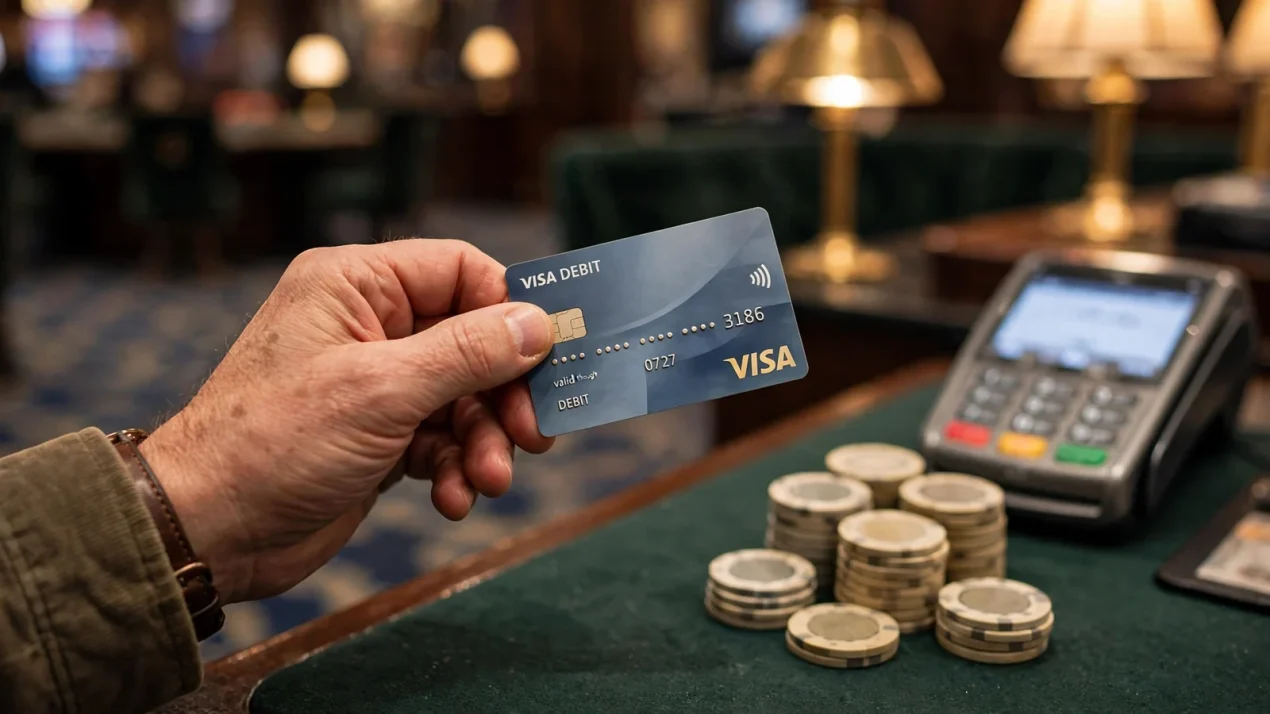
Visa remains a familiar way to fund a gambling account in Britain, but “Visa accepted” is a broad label, not a guarantee that every card bearing the logo will work. UK casinos commonly accept debit cards, including Visa and Mastercard. That general pattern explains why casinos that accept Visa in the UK remain a recognisable category. The practical question, however, is narrower: whether a particular casino currently accepts a particular Visa debit product for gambling.
The distinction matters because a card network is not the same thing as a card type. Visa provides the payment rails; banks and other issuers provide products with their own features and restrictions. A Visa debit card linked to a current account is not equivalent to a Visa credit card, even though both may carry the same familiar mark. Nor does a general payment-method list settle whether a particular card is eligible at a particular site.
In Britain, the difference is not a technical footnote. The regulator prohibited credit-card gambling on 14 April 2020, and the rule remains in force. UK-licensed casinos cannot accept credit-card payments for gambling. The restriction also covers credit-card funding routed through a money service business, and remote operators cannot accept wallet payments where the wallet allows credit-card funds to be used for gambling. Changing the channel does not change the source of the credit.
Casinos That Accept AstroPay in the UK
That prohibition reflects a judgment about the shape of risk. A debit payment draws on money already held in an account; borrowing to gamble can turn a wager into a debt that outlasts the game. The law therefore draws a line at the funding source, not at the Visa logo. A card that looks acceptable at a glance may still be a credit product, or have a function that makes it unsuitable for gambling transactions.
Acceptance is a starting point, not a promise
Lists that name Visa and Mastercard can be useful as an initial indication, but they do not establish current UK availability or the eligibility of every card product. A specialist review may record a payment method at a particular point in time; the operator’s cashier is the more direct place to confirm what is available when an account is being funded. Payment arrangements can change, and a method shown in general information may not appear for every customer or transaction.
Casinos That Accept WebMoney in the UK: What to Check
The cashier is not merely a box where a logo is displayed. It is where the operator presents the payment methods currently enabled for that account. If Visa appears there, the card still needs to meet the operator’s requirements and the issuer’s rules. A declined transaction does not, by itself, prove that Visa is no longer accepted across UK casinos. The cause may lie with the card product, the issuer, the casino’s current settings or the transaction’s eligibility.
This is why claims about “all Visa casinos” or a definitive collection of the best sites accepting Visa can age quickly. A list may describe operators that mention the network, yet omit the distinction between an eligible debit card and a prohibited credit card. A new site’s use of the Visa name is no stronger a guarantee than an older site’s payment page. The logo describes a network, not a universal permission slip.
The same caution applies to broad labels such as “Visa casino”. They do not tell whether a casino accepts only certain debit products, whether its UK cashier currently offers Visa, or whether the card issuer will authorise that particular payment. Those are separate decisions made at different points in the transaction. General acceptance belongs to the operator’s payment setup; approval belongs to the details of the card and payment.
For a UK-licensed casino, the boundary is clear even when the cashier’s interface is not: debit cards may be accepted, but credit-card payments for gambling are not permitted. The fact that a card is issued under the Visa brand cannot override that rule. Nor should a site’s general mention of Visa be read as evidence that a credit card will pass. It will not make the product eligible.
The phrase “Visa accepted” is therefore best understood as a signpost. It points towards a payment network that is commonly available through debit cards, while leaving the decisive checks to the live cashier and the card product itself. That distinction makes the headline less sweeping, but more useful. Logos are not verdicts.
Credit Card Prohibition
UK-licensed casinos are prohibited from accepting credit-card payments for gambling, including funds routed through money service businesses or wallets.
Recommended online casinos
- JetsetspinsBonus: 200% Bonus + 100 Free Spins + Free Royal Wheel · Payout speed: 1-3 business days
- ChanzeBonus: Slots Welcome Bonus #1 200% up to €500 · Payout speed: 1-3 business days
- SlotoSportBonus: 500% up to £ 10 200+ 777 FS · Payout speed: 1-3 business days
- SpinFormulaBonus: 550% Up To £15,000 + 550 FS · Payout speed: 1-3 business days
- EvoSpinBonus: 125% up to €2500 + 125 Free Spins · Payout speed: 1-3 business days
- ZombillionBonus: Welcome Pack 250% up to £4000 + 200 FS · Payout speed: 1-3 business days
When Visa Is One Deposit Route Among Several
Visa is one route through a casino cashier, not the cashier itself. UK casinos commonly accept debit cards, but an account may also display bank payments, e-wallets or prepaid vouchers. Which options appear depends on the operator and the individual account. The useful comparison is not simply whether a method can move money in; it is whether it suits the whole transaction and any promotion attached to it.
PayPal is valued for speed and convenience, though availability at a particular casino still has to be confirmed. Its presence does not guarantee that a deposit will count towards a bonus. A specialist review has noted that PayPal can be excluded from bonus eligibility, so the promotion’s payment terms matter more than the familiar name in the cashier. That qualification is specific to the offer and operator, not a universal rule.
Open banking and bank transfers connect a casino payment to a bank account rather than to a card number. A specialist review reports that these routes can provide instant deposits and fast withdrawals at many sites. “Can” is doing useful work: a transfer’s progress may depend on the service offered by the operator and the bank’s handling of it. A cashier may present bank transfer and open banking as distinct choices, even when both draw on a bank account; the displayed instructions show which route is actually being used.
Casinos That Accept Citadel in the UK: What to Check
A prepaid voucher takes a different approach. Paysafecard is a deposit-only option: it can put funds into a gambling account, but it is not a route for receiving a withdrawal. That distinction matters before a deposit, because a method that works in only one direction may leave a later payment to be arranged through another permitted route. The cashier’s instructions and the operator’s terms determine what happens next.
E-wallets such as Skrill and Neteller are available at some sites. A specialist review describes them as commonly excluded from promotions, but eligibility can vary by offer. A bonus may therefore depend not only on the amount deposited but on the payment route selected. The promotion terms should be read before the transaction; an e-wallet logo alone does not establish that a deposit qualifies.
There is also a boundary around wallet funding. UK remote gambling operators cannot accept wallet payments where the wallet allows credit-card funds to be used for gambling. The restriction follows the source of the money through the payment chain; placing an intermediary between a card and a casino does not make credit-card payments for gambling acceptable. This is one reason a method’s name is not enough to judge whether it is usable: the way the wallet is funded matters too.
Some UKGC-licensed casinos accept Apple Pay for deposits. As with other methods, its appearance at one operator does not promise availability elsewhere, and a deposit option should not be mistaken for a withdrawal option unless the cashier confirms both. The same caution applies to payment brands that may look familiar from other settings. A route can be convenient at checkout yet unsuitable for a particular casino transaction.
PayPal
Valued for speed and convenience, though it may be excluded from some bonus eligibility.
Open Banking & Bank Transfers
Can provide instant deposits and fast withdrawals, depending on the operator and bank.
Prepaid Vouchers
Deposit-only options like Paysafecard that cannot be used for receiving withdrawals.
E-wallets
Services like Skrill and Neteller, which are commonly excluded from promotional offers.
The choice is therefore a small study in how money is permitted to travel. Cards, bank-linked services, wallets and vouchers each create a different path, with different consequences for withdrawals and promotions. A Visa deposit may be straightforward, while an alternative may better fit a player’s banking habits; neither is automatically superior across every casino. The practical comparison begins with three checks: whether the method is offered, whether it supports the intended direction of payment, and whether its use changes bonus eligibility. The cashier is not a catalogue of interchangeable buttons. It is a set of conditions.
Visa Deposits: Card Eligibility and Account Currency
A Visa logo is a useful first clue, not a promise that a particular debit card will work at a particular casino. Specialist reviews may list Visa among a site’s payment methods, but those listings can become outdated and do not establish that every Visa product is eligible. The cashier is the practical test: it shows whether Visa deposits are currently available for the account and whether the card details can be used for that transaction.
This distinction matters because “Visa accepted” describes a payment route in general. A bank may issue different kinds of Visa cards, and a casino’s cashier may not treat them all alike. A Visa debit card is the relevant card type for gambling deposits at UK-licensed casinos; credit-card payments for gambling are prohibited. The brand alone cannot settle eligibility. The product and the operator’s current payment arrangements both matter.
Casinos That Accept Ukash in the UK: What’s Verifiable
Check the cashier, not just the logo
A payment-method list on a promotional page or in a specialist review can help identify what to investigate, but it is not the final word. Availability can change, and a method shown in general information may not appear as an available choice for a particular account. Before relying on Visa, the cashier should be checked for the deposit option itself and for any stated card restrictions.
If Visa appears, the next step is to confirm that the card being used is a debit card and that its product is accepted. If the cashier does not offer Visa, or the transaction is declined, the logo elsewhere on the site does not override that result. A decline may reflect the card product or the payment route rather than a general absence of Visa support; the cashier’s instructions or the operator’s support team can clarify what applies.
The details need to match. Using a card and casino account belonging to the same customer reduces avoidable friction over basic ownership information. This is not a guarantee that a transaction will be accepted, but it keeps a simple mismatch from becoming an extra obstacle.
Confirm the account currency before paying
Currency is a separate compatibility check. A specialist review may report that a casino supports GBP, but that does not confirm the currency selected for every account. The account currency should be checked before the first transaction, alongside the cashier’s available methods. If the account is set to a different currency, the card issuer or another part of the payment chain may convert the amount, with a resulting difference between the sum intended and the sum processed.
Do
- Verify the deposit option in the live cashier
- Confirm the card is a Visa debit product
- Match the account currency with your intended currency
Don’t
- Rely solely on payment logos on promotional pages
- Assume a Visa logo guarantees all card types work
- Ignore the account currency settings before paying
The displayed currency is therefore more than a presentational detail. It affects how a deposit is recorded and may affect the amount charged in the cardholder’s account. The cashier and account settings should agree with the intended currency before the deposit is submitted. A pound symbol on one page is not enough if the account itself is configured differently.
This is a small piece of housekeeping with a financial consequence. Payment screens are designed to make a transaction feel immediate; currency settings are less visible, and less forgiving.
A sensible compatibility check is therefore simple: confirm that Visa is currently offered in the cashier, that the card is an eligible Visa debit product, and that the account currency is the intended one. Specialist listings can point towards a payment option, but only the live cashier and the account settings establish what is available at the point of use. The logo starts the inquiry. It does not finish it.
Using Visa on Mobile Slot Sites
A slot site can open smoothly on a phone while its payment options remain a separate question. The mobile version may provide access to the same account and cashier, but a Visa logo elsewhere on the site does not establish that Visa is available for a deposit from that particular cashier. Payment compatibility has to be confirmed at the point where the transaction is set up.
Casinos That Accept Instadebit in the UK: How to Check
UK casinos commonly accept debit cards, including Visa and Mastercard. That broad pattern is not a promise about every operator, every mobile interface or every card product. A specialist review may list Visa and Mastercard among a casino’s payment methods, but such a list is not confirmation of what the current UK cashier will show. Availability can change, and a mobile user needs the live payment menu rather than an old description.
The practical check is straightforward: sign in through the mobile site, open the cashier and inspect the deposit methods displayed for the account. If Visa appears, the next screen can show whether the card details can be entered and the transaction submitted. If it does not appear, the presence of a Visa mark on a general payments page does not make the route available in that session. A desktop page, an older review and the mobile cashier are not interchangeable evidence.
Mobile design can make this distinction easy to miss. Payment marks may sit near the bottom of a page, while the actual deposit choices are behind an account menu. A compact screen also gives less room for conditions attached to a method. The cashier is therefore more useful than a row of logos: it shows the options presented to the account at the time of the attempted deposit.
The phrase “Visa slots” can suggest that Visa belongs to a particular game, as though a card unlocks a special category of reels. It does not. Visa is a payment method; the mobile site is the interface through which a casino account is managed. A player looking for online slots that accept Visa is really checking whether that casino currently offers a Visa deposit route on mobile. The distinction is less glamorous than the phrase, but more useful.
Payment compatibility must be confirmed within the mobile cashier, as a Visa logo on the general site does not guarantee availability for a mobile session.
A mobile payment page can also be reached before any game is opened, so access to slot content should not be treated as proof that a deposit will work. Where Visa is absent from the cashier, trying to infer availability from the casino’s branding or from another device leaves the central question unanswered. Where it is listed, the displayed instructions and any card-specific prompt are the relevant guide.
That small act of checking belongs to the ordinary architecture of gambling online: the game is visible, but the money moves through a separate system with its own menu and permissions. On a phone, the two can feel like one continuous experience. They are not.
Real-Money Slots and the Limits That Shape Play
A Visa card can be part of a real-money casino account, but it does not set the terms of play. Those boundaries come from the operator’s account controls and the rules governing remote gambling in Great Britain. Payment and permission are separate matters: having a way to fund an account does not remove the checks or limits around using it.
Before a new customer makes a first deposit, a remote gambling operator must prompt them to set a financial limit. Account-level controls must also remain accessible, so limits are not confined to the first visit to the cashier. The design reflects a view of gambling as an activity whose costs should be made visible before money enters the account, rather than only after a player has begun spending. A small pause, with a purpose.
Casinos That Accept USDC in the UK: What to Check
These controls concern the account, not just a Visa transaction. The rules do not turn a card into a spending plan, nor do they mean that every slot session is governed by the same personal limit. They establish a point at which a customer is asked to consider a financial boundary, alongside tools available through the account. That distinction matters when searches for Visa-funded slots blur the payment method and the conditions attached to play.
Real-money online slots also operate within a wider regulatory framework. In Great Britain, operators offering remote gambling must hold the relevant UK Gambling Commission licence. Age must be verified before an operator allows a customer to deposit. The rules are not merely about what appears on the screen; they govern who may open an account and how gambling is offered.
Stake limits apply to online slot games as well. The maximum stake per game cycle is £5 for customers aged 25 and over, while the limit is £2 for those aged 18 to 24. The £5 limit for all adults took effect on 9 April 2025. These are regulatory ceilings, not recommended spending levels, and they do not replace the account’s financial-limit controls.
The rules shape the pace of play, too. Online slot autoplay is banned in Britain, and each spin must last at least 2.5 seconds. A slot session therefore cannot be treated as an uninterrupted stream of automated rounds. The structure puts deliberate friction into a product designed to make repeated play easy. Not exactly an accident.
For anyone considering real-money slots at a UK casino, the important distinction is between the payment route and the safeguards surrounding gambling. Visa may describe how a deposit is made; it says nothing by itself about the operator’s licence, the account’s financial controls or the stake rules that apply to slots. Those obligations belong to the regulated service, not to the card.
Regulatory Safeguards
- Remote gambling operators must prompt new customers to set financial limits
- Maximum stakes for slots are £5 for adults 25+ and £2 for those 18-24
- Online slot autoplay is banned in Britain
- Each slot spin must last at least 2.5 seconds
Visa Deposits and the Route Back to Withdrawals
A Visa deposit and a Visa withdrawal are separate stages, even when the same card sits behind both. A card payment may appear in the casino account immediately, but that does not mean a later payout follows the same path at the same speed. A specialist review describes the contrast plainly: a card deposit can be instant, while a withdrawal may take several business days.
The difference is partly procedural. Before releasing a payout, the casino has to review it internally and may need to complete KYC. A first withdrawal can take longer while those checks are being carried out. The clock for a payout therefore includes more than the movement of money between accounts; it also includes the operator’s decision to approve it. A quick deposit is no promise of a quick return.
UK anti-money laundering rules generally mean winnings must go back to the payment source used to fund the account. This is often called a closed-loop arrangement. If Visa was used for the deposit, the casino may first attempt to return funds to that card, subject to the payment route’s capabilities and the operator’s procedures. A request for a different destination can trigger further checks rather than provide a shortcut.
That is why “Visa direct withdrawal” needs careful interpretation. It describes a possible return route, not a guarantee that every Visa card or casino can receive a payout directly. The cashier’s stated withdrawal options and the casino’s instructions determine what is available for that account. Where another route is proposed, ownership details may need to be verified before the funds can be sent.
Casinos That Accept Interac in the UK: What to Check
Card payments also have a boundary in Britain: credit-card payments for gambling are prohibited at UK-licensed casinos. A Visa-branded credit card is not made eligible simply by carrying the Visa name; the relevant distinction is the card product, and gambling deposits must be made using an permitted route such as an eligible debit card.
Visa has not “closed” in the UK as a general payment network. A particular card payment can fail or a casino may not offer that route, but neither circumstance establishes a nationwide closure. The useful distinction is between the deposit being accepted and the withdrawal being approved, routed and completed. Those are different transactions, with different checks. No instant symmetry.
Bonuses and the Payment Methods That May Not Qualify
A welcome offer is not determined by the cashier alone. A casino may list Visa as a deposit route while setting separate rules for which deposits qualify for a promotion. The distinction matters for any offer attached to a first payment, including a slots bonus or a code entered during registration: the payment method and the promotion’s own terms both have a part to play.
Visa acceptance, then, is not a promise that every Visa deposit will trigger a bonus. Nor does the presence of an offer establish that a particular card payment is eligible. The terms may specify which payment routes count, and those terms can differ between promotions at the same casino. A deposit made before checking them can leave the expected bonus absent. A small administrative surprise, with money attached.
Attention: A card being accepted for deposit does not guarantee that the transaction will qualify for a promotion; always check the offer’s payment-method clause.
The rules around e-wallets illustrate why the cashier and the promotions page should be read together. A specialist review reports that PayPal, valued for speed and convenience, may be excluded from bonus eligibility. That is a report about a possibility, not a rule applying to every casino or offer. The relevant promotion terms decide the matter.
Skrill and Neteller are offered at some sites, and specialist reviews report that promotions often exclude them. The wording should not be stretched into a universal ban: availability and bonus eligibility are separate questions, and the answer can change from one offer to another. Where a promotion excludes a payment route, using that route may mean the deposit does not qualify, even though the cashier accepts it.
The same care applies to no-deposit offers and bonus codes. Their names do not reveal their conditions; an offer may have its own eligibility rules, which need to be checked before activation or payment. A code is not a substitute for reading the terms.
For a Visa deposit, the useful point is narrow but important: the card being accepted does not settle whether the accompanying promotion applies. The offer’s payment-method clause is the deciding detail. Cashier access and promotional eligibility are different permissions.
Minimum Deposits, Payment Limits and Mobile Cashiers
A specialist casino review puts the minimum deposit at £10–£20, with the threshold depending on the payment method. That is a reported range, not a promise that every Visa cashier will accept either amount. A casino may set a different entry point for a particular route, or change which methods are available. The figure shown beside Visa in the cashier is the one that matters for that account.
Casinos That Accept Giropay in the UK: What to Check
A small deposit threshold and a payment cap are different things. The first is the least a transaction can be; the second is the most that can be sent. Maximum deposits may be restricted per transaction, across a day or across a month. Those ceilings can vary with the selected method and account status, so a limit shown for one route should not be assumed to apply to another.
Visa is among the card methods listed by casino sites, but a general payment-method page cannot confirm that it is available at a particular UK-licensed casino at the time of deposit. Nor does a logo settle whether the specific card product can be used. The cashier gives the practical answer: whether Visa appears, what minimum and maximum it displays, and whether the transaction is accepted. A card logo is not a working payment route.
The same check applies on a phone. A mobile site may present a different cashier layout, and the presence of Visa on a desktop page does not establish that the option is currently available in the mobile cashier. Checking there also avoids confusing a remembered payment option with one enabled for the account.
Deposit caps are not the same as account-level financial limits. A cashier cap concerns the payment transaction or method; account controls are separate safeguards for managing gambling activity. Each has its own purpose, and neither can be inferred from the other.
Visa may therefore be usable, but the amount and availability are cashier-specific. The small print is operational.
Deposit Verification
- Check if Visa is currently offered in the cashier
- Confirm the card is an eligible Visa debit product
- Verify that the account currency is correct
- Check the minimum and maximum deposit limits for the route
Comparing Visa Alternatives by Cost and Payout Speed
A useful comparison between Visa and other payment routes has two separate columns: how quickly a withdrawal can arrive, and what the transaction costs from start to finish. A specialist payment review identifies PayPal, open banking services and debit cards connected to fast payout systems as options that can be among the quicker routes. That is a qualified comparison, not a timetable: the casino’s approval process and the payment provider still affect the wait.
Speed alone does not settle the question. A specialist payment review also notes that costs may come from the casino, the payment provider, the card issuer or bank, currency conversion, or a payment network. Some charges appear as a flat fee; others are folded into an exchange rate. The latter can be harder to spot, and a conversion spread may outweigh a visible charge.
The amount matters, too. A fixed fee takes a different share of a small transfer than of a larger one, while a percentage-based charge moves with the sum. A route that appears inexpensive for one transaction may not be so for another. There is no universal cheapest method: the meaningful comparison is the total cost for the intended amount, in the account’s currency, along the route actually available.
Currency deserves particular attention when a casino account and a bank or payment account use different currencies. Conversion may occur at more than one point, depending on the route, and the displayed exchange rate may include a margin. A headline fee cannot show that by itself. The cashier and the provider’s own terms are the places where those details become visible.
Visa remains a familiar payment option at UK casinos, but alternatives can be worth comparing when payout speed or conversion costs matter more than the familiarity of a card. PayPal or open banking may suit a player prioritising a potentially quicker transfer; another route may make more sense where it avoids an unnecessary currency exchange or fee. These are not fixed rankings. A specialist review’s broad comparison cannot replace the terms attached to a particular casino account and payment route.
Casinos That Accept Solana in the UK: What’s Verified
The sensible measure is the net amount received and the time taken after casino approval—not the speed of the deposit or a single advertised fee. Cost is a route, not a label.
Visa Payments Do Not Determine GamStop Status
A Visa logo in a casino cashier answers a narrow question: whether that payment route is offered. It says nothing about whether the operator is connected to GamStop, the UK’s self-exclusion scheme. Payment acceptance and self-exclusion are separate matters; one cannot be inferred from the other.
For customers in Great Britain, the more fundamental distinction is regulatory. A remote gambling licensee serving the British market must hold the relevant licence from the UK Gambling Commission. Offshore casinos sit outside that system, even when their payment pages display familiar methods. Visa acceptance is not evidence of a UKGC licence, nor does a search for casinos outside GamStop establish that a site is lawful for the British market.
Casinos That Accept Wirecard in the UK
The licence number can be checked against the Commission’s public register before an account is funded. The operator’s own information should also explain its self-exclusion arrangements. Those details matter more than a payment logo: a cashier is built to move money, not to explain the safeguards behind an account.
UKGC-regulated remote gambling includes protections intended to make limits visible and usable. Before a new customer makes a first deposit, the operator must invite them to set a financial limit. Account-level controls must remain accessible, so limits are not confined to a single welcome screen or buried in a payment menu. Licensed casinos must also provide responsible-gambling tools, including self-exclusion.
GamStop status therefore cannot be read from the Visa option, and Visa does not make a site safer or less safe by itself. The relevant questions concern the operator’s licence and the self-exclusion arrangements it actually provides. A payment method is only a route into the cashier. The rules are elsewhere.
What is the fastest withdrawal method for UK casinos?
PayPal, open banking and debit cards linked to fast payout systems are generally among the quickest. The casino’s approval process and your verification status also affect how soon the money arrives.
Can I use a credit card at 333 Casino in Great Britain?
No, UK-licensed casinos cannot accept credit-card payments for gambling. This restriction also applies when credit-card funds are routed through a payment service or wallet.
Can I deposit in GBP?
Yes, GBP is supported. Check that your account is set to GBP before depositing to avoid currency conversion.
Which method has the lowest fees?
There is no universally cheapest method. Compare the casino’s charges, provider and bank fees, currency-conversion spread and any network costs for the amount you plan to send.
Is Skrill available?
Yes, Skrill is available at some UK-friendly casino sites and is a common deposit option. It may be excluded from promotions.
Related posts

Terms of Use

Responsible Gambling
